



What does the phrase logistics transportation shipping method mean?
The phrase ‘logistics transportation shipping method’ refers to the specific mode or process used to move goods from one location to another within the supply chain.
The term covers several transportation options such as road, rail, air, and sea, and each has its own set of characteristics when it comes to speed, capacity, cost, and suitability for different types of cargo. The choice of a shipping method is influenced by factors like the nature of the goods, distance, time sensitivity, budget, and the specific requirements of the supply chain.
Why it is important to choose the right logistics transportation shipping method
Selecting the appropriate logistics transportation shipping method is crucial for several reasons:
- Timely Deliveries: The right shipping method is key to ensuring that goods arrive at their destination when expected, which is critical for satisfying customer expectations and avoiding stock shortages, particularly for products that are time sensitive.
- Cost Efficiency: Each shipping method sits somewhere unique on the cost spectrum, so you’ll want to think about your budget and your planned margins when you choose how you’ll ship product.
- Inventory Management: An efficient shipping method facilitates better control over inventory levels. Being thoughtful in how you transport something will help you prevent overstocking or understocking.
- Customer Satisfaction: Prompt deliveries and well-coordinated shipping operations play a significant role in customer satisfaction. Satisfied customers are more likely to make repeat purchases and recommend the business to others.
- Flexibility and Scalability: The right shipping method offers businesses the ability to adapt to changing market demands and to scale operations effectively. The volume of orders can go up or down and you won’t have to sacrifice delivery timelines.
- Global Reach: Companies who trade internationally have to choose a method that make it easy to do so. Different parts of the world will have different requirements for how to transport goods. Understanding these nuances is key to international trading success.
- Product Safety: The safety and quality of certain products, especially those that are fragile or perishable, depend heavily on the choice of shipping method. Make sure you pick the method that keeps products intact and safe during transit.
- Regulatory Compliance: Complying with transportation regulations for different products and regions is essential. Not every shipping method will meet these legal requirements. You don’t want to get caught up in legal complications or delays at customs.
- Supply Chain Efficiency: The right shipping method will fit perfectly into the overall supply chain. The right shipping method will allow for a smooth coordination of manufacturing through distribution.
- Brand Reputation: A consistent, reliable, and efficient approach to shipping bolsters a positive brand image. Customers often associate dependable delivery services with a brand’s professionalism and trustworthiness.
What factors should be considered with different logistics transportation shipping methods
When evaluating different logistics transportation shipping methods, several key factors should be taken into account:
- Speed: Consider the transit time associated with each shipping method. Will the mode you choose be quick if needed (for time-sensitive deliveries)?
- Cost: List out, compare, and add up all the costs, including freight rates, fuel costs, insurance, and customs clearance fees. You don’t want to overspend but you don’t want to give up quality of service, either.
- Reliability: Assess the historical performance of the shipping method in terms of delays and cancellations; look at the rates of on-time delivery.
- Flexibility: Determine the ability of the shipping method to handle diverse types of goods and its capability to reach different destinations. Shipping needs and conditions are often variable, and flexibility is a plus.
- Security: Evaluate the security measures in place to protect goods from theft, loss, and damage during transit. You don’t want to give short shrift to the safe and intact delivery of cargo.
How to choose the right logistics transportation shipping method
Be sure to consider the following factors:
- Type of goods being shipped
- Weight and volume of goods
- Origin and destination of shipment
- Budget Time constraints
- Other requirements (e.g., special handling, temperature control)
The different types of logistics transportation shipping methods
Logistics encompass a variety of shipping methods to cater to diverse transportation needs. You’ve got a plethora of choices: air freight, ocean freight, rail freight, truck freight, intermodal, package delivery, pipelines, inland waterways, refrigerated shipping, tanker shipping, and auto carrier services. Phew! There are a lot, and for good reason: each kind serves specific purposes. Each kind is better or worse at efficient movement of goods and commodities depending on the distances and the terrains. Things to consider when choosing a shipping method? Cost, distance, urgency, and the nature of the cargo being transported.
Air Freight

Recognized for its unmatched speed, air cargo transport emerges as the optimal selection when dealing with goods of high importance or perishability. Its capability to quickly reach destinations globally ensures that goods such as high-value items or those with a limited shelf life are delivered promptly. However, this speed and convenience come at a cost, as air freight is typically the most expensive shipping method. Plus, it’s at the mercy of possible hang-ups due to changing weather. The use of air for transportation is also constrained by rigorous limitations on the sort of commodities permissible, thereby narrowing its suitability for particular categories of freight. Despite these drawbacks, air freight remains a preferred option for urgent or sensitive shipments due to its speed and extensive global reach.
Ocean Freight

Ocean freight stands out as the most cost-efficient shipping option, particularly suited for transporting heavy and bulk cargo. Shipping big stuff on the cheap? That’s where this approach shines, making it a wallet-friendly choice for sizable consignments. Plus, its adaptability means you can send just about anything – a real boon for global trade. It particularly excels when your goods need to travel across oceans to reach far-flung places. However, ocean freight is characterized by slower transit times compared to other shipping methods, which might not be ideal for time-sensitive deliveries. Moreover, it’s vulnerable to delays caused by climatic disruptions and possible bottleneck situations at harbors, which could protract the timeline of consignments even more. Another drawback is that ocean freight is not the best option for shipping perishable goods due to its longer transit times. While acknowledging its constraints, the cost efficiency and adaptability of ocean freight in accommodating various types of goods for extensive global journeys continue to reinforce its popularity.
Rail Freight

Rail freight is a cost-effective option for inland transportation of large volumes of goods over long distances. Its flexibility is a prime perk, allowing it to adapt as an ideal delivery strategy for varying loads—be they small or of medium capacity. Rail lines have the ability to touch a wide range of locations, offering broad geographical reach.
However, rail freight does have some drawbacks. Rail freight often carries a heftier price tag compared to other shipment options like trucking, notably for specific kinds of goods or particular routes. Additionally, while generally reliable, rail freight can sometimes be less dependable compared to other transportation methods, potentially affecting delivery schedules. Furthermore, the susceptibility to potential logistical hold-ups – a result of factors such as maintenance tasks on rail tracks or bottlenecks – can influence its total journey duration.
In spite of the aforementioned obstacles, the ability of rail freight to manage vast quantities effectively and its wide geographic reach keep it as a favored option.
Truck Freight

Truck freight is highly valued for its flexibility and ability to provide door-to-door delivery services, making it an optimal choice for time-sensitive regional transportation. It stands out as one of the most versatile shipping methods, capable of reaching diverse areas, including those that are not accessible by other modes of transport. This method is particularly well-suited for shipping small to medium-sized shipments, offering a convenient solution for a wide range of cargo needs.
However, truck freight does come with certain drawbacks. Typically, the cost of truck transportation tends to be steeper than that of rail shipping, especially when dealing with vast distances or substantial quantities of goods. Additionally, while truck freight is usually quite reliable, it may occasionally be less consistent compared to rail freight. Rewritten Current: The primary obstacle associated with road cargo transport is its vulnerability to interruptions caused by heavy traffic. Current: Road bottlenecks, unfortunate mishaps, or harsh meteorological circumstances can give rise to complications, posing a risk to punctuality and consistency in the delivery schedule.
In spite of the hurdles, the adaptability and extensive reach offered by truck freight continues to solidify its standing as a preferred mode for goods transportation.
Intermodal Shipping

The strategy of intermodal freight transport deftly merges various transit methods, like roadway and railway, to harmonize expenditure with velocity. You’ll really see this strategy hitting its stride when it comes to the long hauls, if you catch my drift. Its primary benefit is the amalgamation of the advantages offered by different shipping modes – it harnesses the cost-effectiveness of rail for long distances while utilizing the flexibility of truck transport for the beginning and end of the journey. This blend, you see, is perfect for transporting massive loads across long stretches.
But, like anything else, there’s a catch – managing intermodal shipping can be kind of a pain. It can be more complex to manage compared to relying on a single mode of transportation. Navigating through the intricacies of multiple modes of transport and their unique timetables is where the real challenge lies. Additionally, intermodal shipping may involve additional handling and transfer costs, as goods need to be moved and secured as they shift from one mode of transport to another.
But even with these hitches, many businesses still lean towards intermodal shipping. Why? Well, it’s a practical and wallet-friendly option for hauling goods over great distances. It lets them tap into the best bits of various transportation modes to get the job done right!
Package Delivery

Package delivery services, such as those offered by FedEx, UPS, DHL, and private providers, specialize in express parcel delivery and are known for their real-time tracking capabilities. These services are highly convenient for consumers, particularly for shipping small packages. They dish out a variety of features to amp up your package-sending journey, throwing in exhaustive tracking and assured delivery notifications. This way, customers stay clued-in about their parcel’s status and its touchdown time—absolutely no guesswork involved.
However, there are some drawbacks to using package delivery services. One of the main concerns is the cost; these services can be more expensive than other shipping methods, especially for larger or heavier items. But let’s not forget, delivery options might hit a snag in some areas. If you’re tucked away in an out-of-the-way place or your location is just tough to reach, this could throw a wrench into things for you as a customer.
But, you know what? Despite these hitches, folks still love using package delivery services. They’re convenient and dependable, plus the extra perks like tracking your parcel or getting a confirmation when it’s delivered are pretty cool. So whether you need to ship something across town or around the globe, they’ve become a solid pick for sending small packages.
Pipelines

Pipelines, you see, they’re pretty slick for moving stuff like liquids, gases, or even slurries. It’s all about efficiency when it comes to transport over long distances. This approach is hands down the most budget-friendly for moving liquids and gases, especially when you’re talking about covering vast distances. For transporting hefty loads of stuff, like liquids and gases, pipelines are just the ticket because they can manage a ton in one go. But, let’s not forget the bright side. They’re seen as dependable and safe. When you look at other ways to transport stuff, pipelines have fewer accidents and spills. So yeah, they’re pretty solid in that respect.
However, there are certain limitations to using pipelines. Their usage is inherently restricted to transporting only liquids and gases, which means they cannot be used for solid goods. The availability of pipeline transportation is also limited to specific areas where such infrastructure is in place. Getting a pipeline network up and running isn’t a walk in the park. You’re talking about shelling out big bucks, plus some serious planning – we can’t just wing it. The specialized nature of pipelines means they’re not as flexible or readily available compared to other shipping options.
But, even with these limitations, we can’t ignore that pipelines play a crucial role in logistics for certain sectors. They’re a reliable and cost-effective choice when it comes to moving large volumes of liquids and gases.
Inland Waterways

Inland waterways involve the use of barges to transport goods via navigable rivers and canals. Leveraging river and canal barges for the purpose of freight movement over extensive distances is not just a green, carbon footprint-reducing choice; it’s also significantly light on the pocket when dealing with large-scale transportation. Plus, it’s pretty eco-friendly because it leaves a smaller carbon footprint than if you were to use road or air transport. Also, let’s not forget how safe and steady inland waterways are – they give a rock-solid way to ship all sorts of goods.
However, there are some limitations associated with inland waterway transportation. It is generally the slowest shipping method, which might not be suitable for time-sensitive goods. This method’s usefulness is pretty much tied to whether or not the destination has navigable waterways, you know? So that really limits where we can send stuff. Therefore, it is not available in areas without such infrastructure.
Though they might not be the quickest and their reach is limited, you can’t overlook inland waterways’ role in logistics. They’re particularly crucial for industries needing to haul bulk goods around while still trying to keep things cost-efficient and kind on Mother Nature.
Refrigerated Shipping

Refrigerated shipping utilizes reefer trailers or containers to transport temperature-sensitive goods. When you’re shipping stuff like food, drugs or some specific chemicals that need to stay cool – it’s very important they stick at the right temp during their journey. Why? Well, because it keeps them in top-notch condition and stops them from going bad. Cooling down cargo isn’t just for trucks. You’ve got planes, boats, and yes, those big rigs too – all rigged up to keep stuff chilled during transit. So whatever your shipping needs are? There’s a cold freight solution ready to step in and do the job.
However, refrigerated shipping comes with certain drawbacks. It is typically more expensive than standard, non-refrigerated shipping due to the specialized equipment and energy required to maintain consistent temperature control. However, this bespoke machinery demands a higher degree of care and strategic operation planning.
But, you know, even with all the extra cash and hassle involved, we can’t do without refrigerated shipping. Think about industries that deal with stuff like perishables – they rely on this to keep their products in top shape while getting them from point A to B. Plus, it helps them stick to rules and regulations during transit too. So yeah, despite everything, it’s kind of a lifesaver for these businesses.
Tanker Shipping

Big trucks or ships, known as tankers, are typically used when there’s a need to move massive amounts of liquid material like oil and chemicals. It’s not just efficient but also easy on the pocket when it comes to moving these cargoes in massive quantities. Tanker shipping has a solid rep for being dependable, not to mention safe. They’ve really put in the work to make sure they’re ready for anything that comes with moving liquid cargo around. High-level safety checks and all – it’s impressive stuff!
However, tanker shipping does have certain limitations. But here’s the thing, you can only use tanker shipping for liquids. It just doesn’t work for other types of cargo – a pretty significant limitation if you ask me. Additionally, the availability of tanker shipping is confined to areas that have the necessary infrastructure to support it, such as ports for tanker ships and roads suitable for tanker trucks. This requirement for specialized infrastructure means that tanker shipping might not be an option in regions lacking these facilities.
But even with all its restrictions, tanker shipping still holds as a critical part of our worldwide logistics web. It’s particularly key for businesses knee-deep in producing and moving oil, chemicals and other liquid goods around the globe. The sheer volume of liquid goods that tanker shipping can move efficiently makes it a non-negotiable asset for companies in these sectors.
Auto Carrier
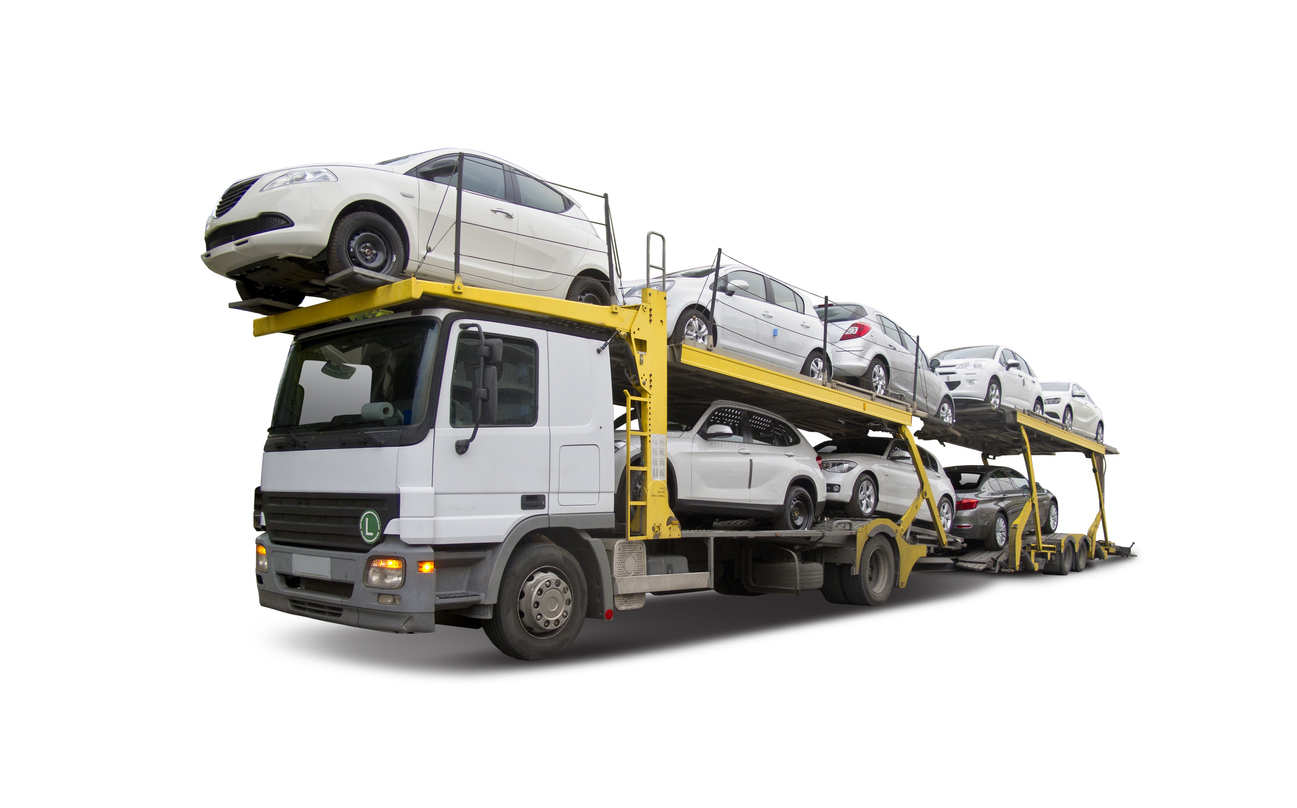
Auto carriers involve the use of specialized trailers designed specifically for transporting finished vehicles over land. Recognized as the top dog for moving many vehicles at once, this method is a no-brainer for manufacturers and dealerships looking to spread their fleet of cars, trucks, and other machines around. They make sure your ride gets to where it needs to go, safe and sound – no dings or scratches.
However, there are certain limitations to using auto carriers. But you’ve got to remember, these auto carriers are strictly for transporting vehicles – they’re not built to haul any other kind of cargo. Additionally, auto carrier services may have limited delivery options in some areas, particularly in regions that are not easily accessible or lack the necessary infrastructure for large transport trailers.
Despite their shortcomings, it’s impossible to overlook the indispensable role auto carriers play in facilitating bulk vehicle transportation within and beyond national borders – a linchpin for the automotive sector.
What is FTL in logistics transportation?
In the world of logistics transportation, you might hear the term FTL – that’s short for Full Truckload. It’s what it sounds like: using a whole truck (think trailers or containers) just for one shipment alone. Whether it’s a massive order or several smaller ones from the same sender, an entire vehicle gets dedicated to it. Because the entire capacity of the truck is dedicated to this single customer’s cargo, there are several key advantages:
- Dedicated Space: The entire truck space is allocated to a single shipment, ensuring that the cargo from one origin goes directly to one destination without sharing space with other customers’ goods.
- Direct Route: FTL shipments typically follow a direct route from the pickup point to the delivery destination, eliminating the need for multiple stops to accommodate other shipments.
- Faster Transit Times: The absence of additional stops for other deliveries often results in faster transit times for FTL shipments compared to Less-Than-Truckload (LTL) shipping, where a truck carries goods from multiple customers.
- Reduced Handling: With FTL shipping, the cargo is handled less frequently during transit. This minimal handling reduces the risks of damage or loss, a contrast to LTL shipments which may involve multiple loading and unloading processes.
- Pricing: The cost of FTL shipping is typically calculated based on the distance to be traveled (per mile or kilometer) and can also factor in additional required services such as loading and unloading.
FTL shipping is thus an efficient and secure option for large shipments or when a shipper prefers exclusive use of a truck for their cargo.
What is PTL in logistics transportation?
PTL, or Partial Truckload, is a shipping mode in logistics transportation that sits between Full Truckload (FTL) and Less-Than-Truckload (LTL). This method is suitable for shipments that occupy more space than what is typically allotted in an LTL shipment but do not necessitate the full capacity of an entire truck. Here are the key characteristics of PTL shipping:
- Space Utilization: In PTL shipping, the cargo takes up more space than in LTL shipping but does not fill an entire truck. This allows for more efficient and cost-effective transportation when the shipment size is too large for LTL but not large enough to justify the cost of FTL.
- Shared Space: PTL shipments share truck space with other partial shipments from different customers. Despite sharing, each shipment is usually separated and secured to prevent mixing and ensure safety during transit.
- Flexible Capacity: PTL offers shippers a flexible solution in terms of both space and pricing. Shippers pay only for the space they use, making PTL a cost-effective option for larger shipments that don’t require a full truck but exceed the size limits of standard LTL shipments.
- Reduced Handling: PTL shipments typically involve fewer handling points compared to LTL, which translates to a reduced risk of damage and more secure transportation of the goods.
- Transit Times: PTL shipments often benefit from shorter transit times compared to LTL due to fewer stops and less handling along the route, making it a faster option for larger shipments.
Overall, PTL is an efficient and flexible shipping method, ideal for those in-between cargo sizes that require more space than LTL without the cost of a full truckload.
What is LTL in logistics transportation?

LTL, which stands for Less-Than-Truckload in logistics transportation, is a shipping mode where small shipments from various customers are consolidated into one truckload. This method is characterized by each shipment occupying only a portion of the truck’s space, enabling shippers to share the costs and resources of transportation. Here’s an overview of LTL shipping:
- Shared Space: LTL shipping involves multiple shipments sharing the space in a single truck. Each shipment is carefully packed, labeled, and loaded, often separated by pallets or containers to ensure they remain distinct and secure during transit.
- Cost Efficiency: For small to medium-sized shipments, LTL shipping is a cost-effective option. Shippers pay only for the space their cargo occupies, making it a more economical choice than booking an entire truck, as in Full Truckload (FTL) shipping, for smaller loads.
- Hub and Spoke Model: LTL carriers typically operate on a hub and spoke system. Shipments are collected from various sources and brought to a central hub, where they are sorted and grouped according to their destinations. They are then dispatched to the respective spokes, or destinations, for final delivery.
- Transit Time: While transit times for LTL shipping may be longer than FTL due to the multiple stops involved in picking up and delivering different shipments, carriers optimize their routes to ensure efficient and timely deliveries.
- Freight Class: Shipments in LTL are categorized based on their freight class, which takes into account factors like weight, dimensions, density, value, and handling ease. This classification plays a crucial role in determining the cost of shipping.
- Tracking and Visibility: LTL carriers offer tracking and visibility tools, allowing shippers to monitor their shipments’ movements and status in real-time, adding a layer of transparency to the shipping process.
- Consolidation and Deconsolidation: A key feature of LTL shipping is the process of consolidating shipments at distribution centers and then separating them at the destination terminal for final delivery. This approach is integral to the efficiency of LTL shipping.
LTL shipping is thus a practical and efficient option for businesses with smaller shipments, offering a balance of cost-effectiveness, tracking capabilities, and route optimization.
What is expedited shipping in logistics transportation?
Expedited shipping in logistics transportation is a specialized service designed for the rapid transport of small packages or parcels from one location to another. This type of shipping is ideal for items that can be handled and transported individually, such as documents, clothing, electronics, and other small goods that easily fit into boxes or envelopes. Here are the key features of expedited shipping:
- Individual Shipments: Each parcel in expedited shipping is treated as an individual shipment, complete with its own tracking number and destination address, ensuring personalized handling and delivery.
- Courier and Express Services: Expedited shipping is typically handled by courier companies and express carriers. These services are designed for fast and time-definite deliveries, catering to urgent shipping needs where time is of the essence.
- Wide Range of Sizes: Expedited shipping accommodates parcels of various sizes, from small envelopes to larger boxes, allowing for flexibility in the types of items that can be shipped quickly.
- Tracking and Visibility: One of the hallmarks of expedited shipping is the provision of advanced tracking systems. These systems enable both the sender and the recipient to track the parcel’s status and location in real-time, adding a layer of transparency and reassurance.
- Last-Mile Delivery: A critical component of expedited shipping is efficient last-mile delivery, which focuses on the final leg of the delivery journey. This ensures that parcels are delivered swiftly from local distribution centers to the recipient’s doorstep.
- Drop-off and Pickup Locations: Expedited shipping services often offer convenient drop-off and pickup options, such as local post offices, parcel lockers, or retail locations. This flexibility makes it easier for customers to send or receive parcels according to their schedules.
- Shipping Labels: Each parcel in expedited shipping is meticulously labeled with essential information including sender and recipient details, tracking numbers, and other pertinent data to guarantee accurate handling and delivery.
- Insurance and Liability: To protect the value of the items shipped, expedited shipping services frequently offer insurance options. This provides compensation in cases of loss, damage, or theft during transit, adding an extra layer of security to the shipping process.
Expedited shipping is thus an optimal solution for those needing fast, reliable, and trackable delivery of smaller items, ensuring that time-sensitive parcels reach their destinations promptly.
What is parcel delivery in logistics transportation?
Parcel delivery is the lifeblood of e-commerce and retail. Think about it – those small packages that get shipped from one spot to another, they’re pretty essential in the logistics transportation game. They keep the supply chain rolling smoothly.
Parcel delivery is self-explanatory: it’s moving small packages from point A to B. Each package is its own shipment with a unique tracking number heading towards a specific destination – no bulk shipping here! Couriers or postal services do most of the heavy lifting, getting parcels out to consumers and businesses alike. Size? Not an issue. You’ve got tiny envelopes perfect for documents up to big boxes that can hold your latest online shopping haul. Tracking is a given; these days you get real-time updates on where your parcel is at any given moment – talk about transparency! “Last-mile delivery” covers how you get items from local distribution centers right onto people’s doorsteps. Last mile delivery determines customer satisfaction! There are so many options when it comes down to delivery timelines: standard, express, same-day or next day. Want more convenience? Check this out – some companies offer different drop-off and pickup locations like post offices or even automated kiosks. Super handy for easy collection! Then each box gets slapped with a label packed full of important info such as addresses and special instructions (packaging also plays a huge role in keeping everything safe during transit). And last but not least: insurance! Many places will give customers the option for coverage just in case something goes wrong en route—think loss, damage, theft—that kind of stuff.
- Individual Shipments: Each parcel represents an individual shipment, complete with a unique tracking number and designated destination address. Unlike bulk shipments, parcels are handled and processed separately, catering to individual delivery requirements.
- Courier and Postal Services: The delivery of parcels is typically carried out by courier companies, express delivery services, or national postal services. These organizations are skilled in efficiently and promptly delivering individual parcels to both consumers and businesses.
- Various Sizes: Parcels vary in size, ranging from small envelopes suitable for documents to larger boxes that can hold items like clothing, electronics, and other consumer goods. This variety allows for the accommodation of a wide range of items to be shipped.
- Tracking and Visibility: Modern parcel delivery services provide advanced tracking systems. These allow both the sender and recipient to follow the parcel’s journey and current location in real-time, enhancing transparency and communication.
- Last-Mile Delivery: A key aspect of parcel delivery is the focus on the ‘last mile’ – the final stage of delivery from local distribution centers to the recipient’s doorstep. This critical phase often determines the overall customer satisfaction with the delivery service.
- Delivery Options: Various delivery options are available, including standard, express, same-day, or next-day delivery. Customers can select the option that best fits their time requirements and budget.
- Drop-off and Pickup Locations: For added convenience, many parcel delivery services offer various drop-off and pickup locations, like local post offices, parcel lockers, retail stores, or automated kiosks. This flexibility is beneficial for easy parcel collection.
- Shipping Labels and Packaging: Each parcel is equipped with a shipping label that contains vital information such as sender and recipient addresses, tracking numbers, and special handling instructions. Proper packaging is also crucial to ensure item protection during transit.
- Insurance and Liability: To safeguard the value of the shipped items, many parcel delivery services offer insurance options. This insurance provides compensation in the event of loss, damage, or theft during transportation.
Parcel delivery, with its array of options and features, is integral to ensuring timely and efficient distribution of goods, particularly in consumer-focused industries.